
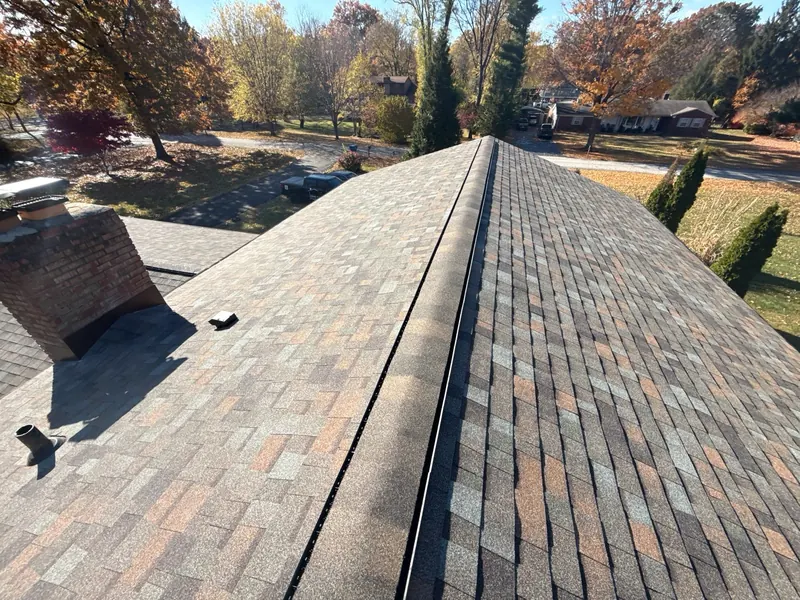
Start with the pattern, not the leak
A single leak tells you almost nothing on its own. What matters is whether the failure is isolated or spread out. One split pipe boot on a fifteen year old roof is a repair. Three leaks in three different places on that same roof usually means the shingles have reached the end of their service life and the next leak is already forming somewhere you have not found yet.
So the first question is not "how bad is this spot." It is "is this spot unusual, or is it the first one to give out." Walking the whole roof answers that. Looking only at the stain on the ceiling does not.
Signs that usually point to a repair
- Damage confined to one slope, one penetration, or one run of flashing
- A roof still in the first half of its expected life with shingles that are flexible, not brittle
- Wind lifted or missing shingles in a single area after a specific storm
- A failed pipe boot, a loose vent, or a chimney flashing that has pulled away
- Granule loss that is normal for the roof age and not concentrated in bare patches
Signs that usually point to replacement
- Shingles curling, cupping, or cracking across whole slopes rather than in one corner
- Bare spots where the granule surface is gone and the mat underneath is exposed
- Leaks that keep appearing in new locations after each repair
- Soft or spongy decking underfoot, which means water has been getting in for a while
- A roof at or past its expected life, especially if it was a builder grade three tab
The age question, specifically in central Indiana
Shingle life is not one number. A basic three tab shingle and a modern architectural shingle are different products with different lifespans, and the same shingle performs differently depending on how well the attic below it breathes. Central Indiana is hard on roofs in a particular way: we get real freeze and thaw cycling, summer attic heat, and a spring storm season that arrives every year whether the roof is ready or not.
That combination means ventilation matters as much as the shingle brand. An underventilated attic cooks shingles from the underside and ages a roof years faster than the same roof on a house with balanced intake and exhaust. If your roof failed noticeably early, ventilation is usually part of the story, and it is worth fixing before the new roof goes on. Our attic insulation and ventilation page covers what balanced actually means.
The repair trap worth naming
There is a point where repairs stop being the cheaper choice. Each visit has a cost, and on a roof that is genuinely failing, each repair buys less time than the one before it. Three repairs across two years on an aging roof will often add up to real money spent on a roof you are going to replace anyway, and the water that got in during those two years may have done damage to decking and insulation that you now pay to fix as well.
The flip side is just as true. Replacing a roof that had years left in it is the more expensive mistake, and it happens often, because a replacement is a much bigger sale than a repair. That is the tension to be aware of when someone inspects your roof.
What the decking tells you
Decking is the layer most homeowners never see and the one that changes the answer most. Sound decking means a repair has something solid to attach to. Soft, delaminated, or rotted decking means water has been sitting in the assembly, and no surface repair fixes that. Our owner, Scott Mason, is a Purdue trained construction engineer, and the reason we look at the roof as a system rather than as a shingle surface is that the decking, the ventilation, and the flashing decide how long the shingles last.
You can get a good read on decking from the attic side without tearing anything off: daylight at the seams, dark staining along the sheathing, damp insulation, or rusted nail tips all point the same direction.
When insurance changes the math
If the damage came from wind or hail rather than age, the decision is different. A covered storm claim can turn a replacement into a far smaller out of pocket number, and the deciding factor becomes documentation, not budget. That is a different process with its own timeline and its own paperwork, and our storm damage and insurance claims page walks through what it involves.
Worth knowing: age related wear is not a covered loss. An adjuster is looking for storm damage specifically, so the inspection needs to distinguish the two honestly. Overstating it does not help you, and it is the fastest way to get a claim denied.
What each one actually costs
Numbers help this decision more than anything else on the page. Most shingle roof replacements we do run $12,000 to $18,000 depending on size, pitch, stories, decking, and complexity, with attic ventilation or insulation work adding $3,000 to $8,000 when a roof needs it. A repair is a small fraction of that.
Which is exactly why the trap in the previous section matters. Three repairs on a roof that is genuinely finished can approach real money without ever solving the problem, while replacing a roof with years left in it is the more expensive mistake in the other direction. Our cost breakdown shows what moves the replacement number, and what the warranty covers once the new roof is on.
How we handle the call
We come out, get on the roof, and look at the whole thing rather than the leak alone. You get photos of what we found, including the parts that are fine. If a repair solves it, we quote the repair and leave, and most leak calls end there. If the roof is genuinely done, we show you the evidence and explain what we saw, and you can compare it against the roof replacement page or a second opinion. Either way the estimate is free and there is no pressure attached to it.